People
Principal Investigator
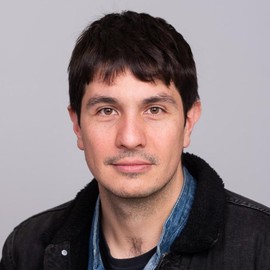
Thomas A. Püschel
School of Anthropology and Museum Ethnography, University of Oxford
Tutorial Fellow, St Hugh's College
Thomas leads the Comparative Evolutionary Anthropology (CEA) group at the University of Oxford. His research seeks to understand what makes humans unique by placing our species in comparative context — alongside other primates and mammals — and asking which features of human anatomy, behaviour, and evolution are genuinely distinctive, which are shared with our relatives, and which evolved independently across the tree of life. To address these questions he draws on an integrative toolkit spanning 3D morphometrics, virtual computational biomechanics, phylogenetic comparative methods, and fieldwork, applied to both living species and the fossil record.
He completed his PhD at the University of Manchester (2018), his MSc at the University of York, and his undergraduate degree at the University of Chile. He was a Leverhulme Early Career Fellow at Oxford and a postdoctoral researcher at the University of Reading before taking up his current position in 2023.
DPhil Students
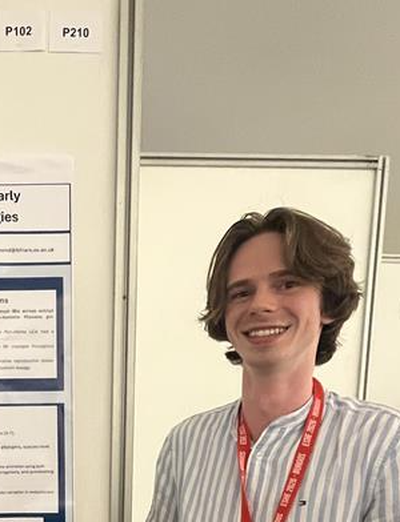
Reece Hammond
Reece is an evolutionary anthropologist interested in using comparative methods to reconstruct key evolutionary transitions in human behaviour and cognition. His DPhil research focuses on using the behavioural responses of extant non-human primates towards their dead to reconstruct the evolution of humanity's unique relationship with death. Reece is also conducting research on the evolution of the hominin life history pattern to infer when modern human reproductive behaviour emerged in the hominin lineage.
Research interests: Thanatology, life history, infant corpse carrying, chimpanzees, human evolution
MSc Cognitive & Evolutionary Anthropology, University of Oxford (2024) · BA Archaeology and Anthropology, University of Oxford (2023)
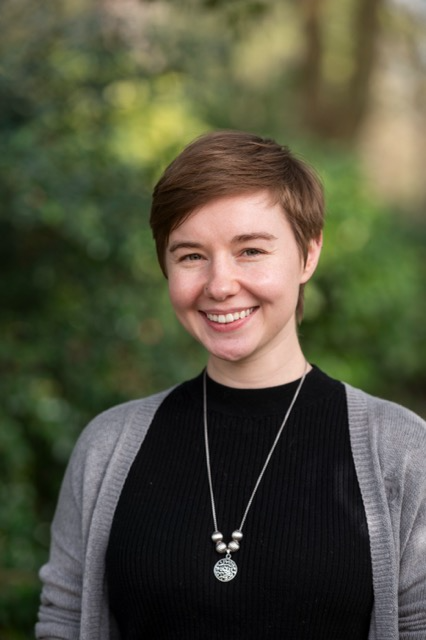
Rachel Hurwitz
Rachel is a biological anthropologist broadly interested in how osteological remains — and specifically the post-crania — can provide insight into modern human and primate adaptations, as well as help reconstruct the lives of our ancestors. Her DPhil research focuses on whether and how lateralized behaviours impact directional asymmetry in bones of the hand across the primate order, with a particular focus on our closest living relatives, the great apes. She has a background in human anatomy, and worked in clinical research at Michigan Medicine for four years before coming to Oxford for her MSc.
Research interests: Osteology, palaeoanthropology, primatology, laterality, handedness, anatomy, hominin evolution
MSc Cognitive & Evolutionary Anthropology, University of Oxford (2023) · BS Evolutionary Anthropology, University of Michigan (2018)
Research Associates
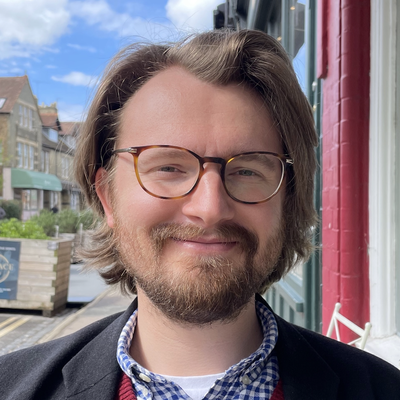
Jamie Scott
Jamie is an interdisciplinary researcher whose work combines cognitive science, evolutionary anthropology, linguistics, and experimental archaeology. His PhD examined the effects of language on cognition and lithic tool production, and explored the implications for the evolution of the capacity for language. He is now expanding his research to broader problems in these fields while maintaining an interdisciplinary perspective. James teaches human evolution at Oxford and is a Lecturer in Biological Anthropology at Oxford Brookes University.
Research interests: Language evolution, language and cognition, palaeolithic archaeology, experimental archaeology, cognitive evolution, hominin evolution
PhD in Psychology, University of Cambridge (2025) · MPhil in Biological Anthropological Science, University of Cambridge (2020) · BA Hons in Psychological and Behavioural Sciences, University of Cambridge (2019; MA Cantab 2022)
Former Members
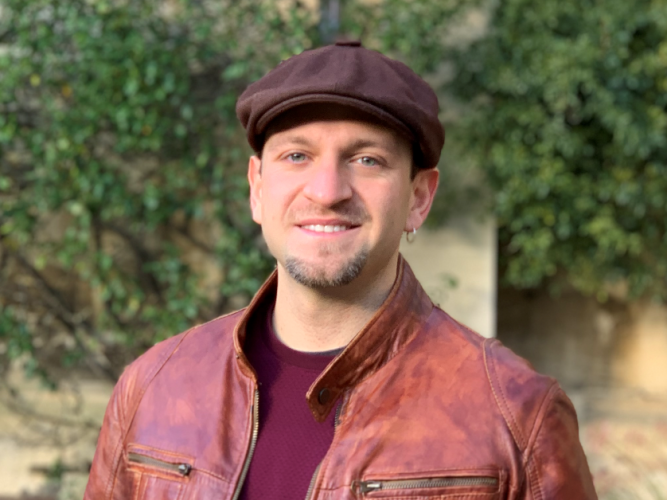
Dr Gabriele Paone
Gabriele studies how children in harsh and unpredictable environments develop hidden abilities, combining experimental cognitive studies with ethnographic fieldwork in Brazilian favelas, southern Italy, Roma communities, and rural Mozambique. He also examines community-based martial arts programmes as settings for children's wellbeing, working with local NGOs to translate research findings into culturally grounded education and support initiatives.
DPhil Anthropology, University of Oxford · MSc Cognitive & Evolutionary Anthropology, University of Oxford
Collaborators
We work with researchers at institutions nationally and internationally, including colleagues in the Palaeo-Primate Project.
Get in touch if you’re interested in collaborating.